Don’t be Fooled: Be Paranoid

Unsurprisingly, Neil Postman was wrong.

Now, not everything the media theorist postulated in his peak 1980s research was completely wrong–just mostly (as is usually the case when old, straight, white men see society changing and fear their position as oppressors is threatened).

But Postman presented an ideology back in his day that is still reigning supreme in our subconscious and, in an era of myriad technological resources, is becoming increasingly dangerous to practice.  

Postman–who hated television, believed the news cycle was sensationalized and valued a typographic approach to, well, everything–ironically valued images above all else. Images were the embodiment of the unaltered, undebatable truth.

Cue the millennial and Gen Z laughter. 

Granted, Postman died before the era of the Internet and couldn’t possibly predict the future we currently live in. Which is why it’s rather shocking so many people still buy-in, albeit often unintentionally, to his belief. 

Fake images are an accepted reality in our world of Instagram filters and easily accessible photo editing software. Even real images, ascribed incorrectly on social media or news platforms, perpetuate an online culture in desperate need of fact-checking. 

But if we are aware not everything we see is real–why do some still believe in it?

Simple: confirmation bias. 

Most people who spread false images or alter photos do so because they have specific intentions, usually political ones. And they know even if the image is proven falsified or misleading, confirmation bias will ensure the message survives–in fact, calling out false images can often have the inverse effect and convince more people to rally against the truth.

It’s a vicious cycle, and it means the era of fake news is far from over.

Thankfully, some social media websites are catching on. But this isn’t a reliable solution, as businesses are just that–a business. Their morals can only stretch so far from their wallets.

Yet again, consumers of media are left up to their own devices when it comes to the question of ‘what is the truth?’ But perhaps that is exactly what Postman was trying to combat: consumers so caught up in the media’s bells and whistles they couldn’t see the bigger picture of truth: not all media is on the side of the people.
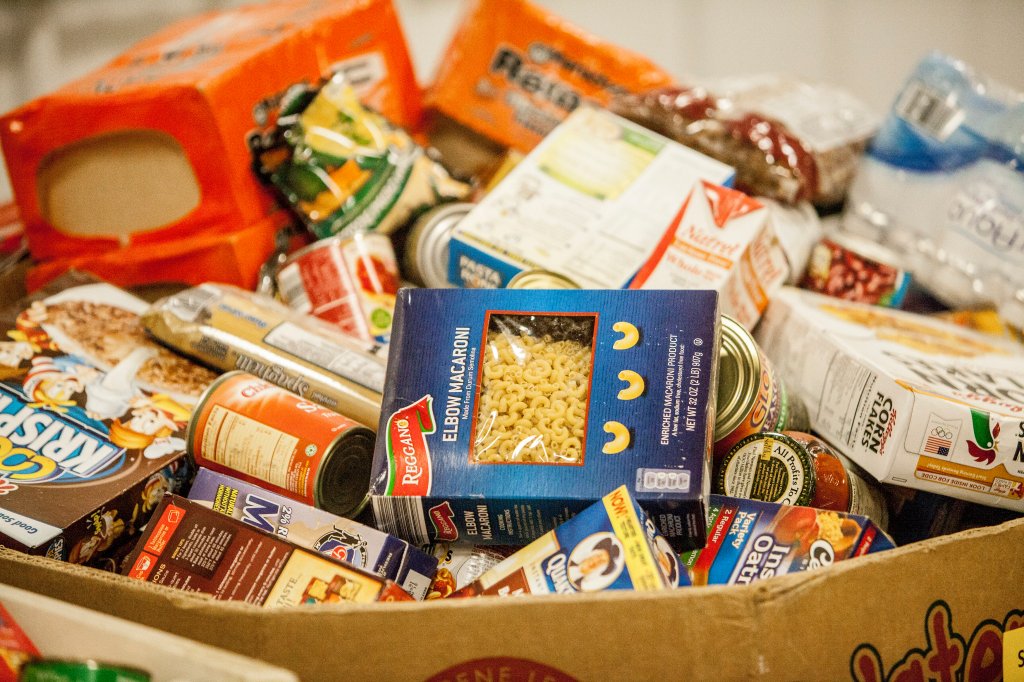
Bradley students forced to choose between food and education

Image taken from https://foodbanknwi.org/donate-food/

When Bradley student Sydney was asked by her professor why she couldn’t afford the textbook for his class, her stomach answered for her–growling so loudly her professor asked if she was ill.

“I was mortified,” Sydney, who preferred not to use her real name, said. “It’s just a constant reminder of the position I am in.”

Sydney is only one of the estimated 4.6 million students struggling with food insecurity on college campuses. The U.S. Department of Agriculture (USDA) defines food insecurity as a lack of consistent access to enough food for an active, healthy life. And for students, food insecurity often means a lack of available financial resources for both food and education.

While all college campuses deal with food-insecure students, Bradley University has a unique positioning that makes the issue more prevalent than most. Peoria is a recognized food desert, which already places a strain on community members to find affordable, nutritious food. However, Bradley students are further denied accessibility based on campus regulations and factors. 

Abby Surprenant, a former Bradley student, argues Bradley should be making active changes to assist in the prevalence of food insecurity on campus. While completing her senior year as an Organizational Communication major, she conducted a survey of Bradley students on the issue of food insecurity.

The results shocked her. More than 16% of students surveyed said they weren’t always sure where their next meal would come from due to financial strain. 

“These are my classmates, my friends. I had no idea they faced something like this,” Surprenant said. 

Surprenant blames a series of systematic flaws for Bradley’s community of food-insecure students, however, she warns students’ limited transportation options are one of the largest contributors. Around 23% of the students surveyed had no access to cars and no other transportation to grocery stores. 

But when it comes to addressing this issue, Bradley’s administration has been less than enthusiastic.

Andrew Yohanan, former member of Bradley’s Student Senate and Dining Services Committee Head, says concerns on food insecure students have been brought up to the administration before. But students were told to use the community food shelter–the Peoria Area Food Bank–rather than directly addressing it on campus.

The solution is “barely a band-aid” according to Yohanan, who reminds only Peoria residents are allowed to use the community shelter. 

And for Sydney, an out-of-state student without a car, the community shelter isn’t an option. 

“I feel like they’re punishing me for being poor, you know?” Sydney said. “Like not being able to afford food is somehow my fault.”

Playing Platform Politics: Is TikTok really the future of Free Speech?

The latest social media craze has been commended for its promotion of free information, but equivalency isn’t the same as advocacy.

Without specified limitations on what views are granted promotion, those of us falling under marginalized umbrellas are left anxious and deeply concerned.

In the latest rendition of social media activism, the gimmicky, short-video-generated app TikTok made headway in 2019 as an advocacy-driven platform. After hitting an estimated one billion installs in February, teenagers in the US, Europe, and China began promoting content related to climate change, medical activism, queer content, and a plethora of videos revealing the horrors of authoritarian governments. Along with more “meme-able” content, of course.

And while the prospect of a user-generated, non-censored platform to discuss social issues seems in line with American values of Free Speech, I can’t help but wonder–just who’s speech are we promoting?

Sure, the answer is easy when students of color are posting about Ivy League universities’ absurd lack of POC resources. But when news platforms give TikTok credibility–and teenagers are granted free range–we have to look at the potential messages that could be spread to billions of impressionable kids. Particularly when politics are involved.

BuzzFeed News is eager to involve themselves in the first round of TikTok’s Free Speech experiments. After announcing they would be hiring “Teen Ambassadors” to create 2020 election coverage content through original TikTok and Instagram videos, BuzzFeed News proposes to give teenagers the same platform as their Pulitzer Prize-winning journalists. The idea behind it: “videos for Gen Z platforms by Gen Z users.”

Though unsurprisingly, BuzzFeed News gives no clear indication of the type of individual they are looking to hire–other than generic messages about being passionate and creative–nor what political views these ambassadors would promote. Bipartisan? Clear liberal or conservative views? A mix between them? Without specified limitations on what views are granted promotion, those of us falling under marginalized umbrellas are left anxious and deeply concerned.

Potentially, these new ambassadors could reveal the nuanced experiences of what it is like to be a queer liberal in Arizona, or how young black teens address racial issues with an overwhelmingly white candidate selection. Or, they could be the newest “deep dive” into the life of a teen Neo-Nazi. The only thing for certain is that BuzzFeed is granting them the resources and branding of a journalist–without any of the ethical training.

From a marketing perspective, it’s genius. Teens are much more likely to absorb information from other teens than a forty-something news reporter. But from a moral perspective, it’s terrifying. Children between the ages of sixteen to nineteen are now in charge of presenting information on the United States’ largest political election, in a time where skepticism against journalism is rampant.

The most frightening part is how truly effective the concept might be. Not only does TikTok have a large scope, but proper use of their algorithms has already led to concerning instances of teh app being used as image management. Police have certainly found it–and are using it to distract from police brutality in some regions. When used effectively, TikTok has unquestionably influenced viewers in a way that is equal parts awe-inspiring and eerie.

Without knowing who is being granted TikTok’s unfiltered Free Speech powers, BuzzFeed’s actions remain questionable. As for the platform itself, the only thing we know for sure is that teens will keep using it to bolster their views and activism. We, as consumers, will have to be the ones discerning the activist content from the propaganda.

Create your own website, free on WordPress.com.Create your own website.
Start free