Featured

Playing Platform Politics: Is TikTok really the future of Free Speech?

The latest social media craze has been commended for its promotion of free information, but equivalency isn’t the same as advocacy.

Without specified limitations on what views are granted promotion, those of us falling under marginalized umbrellas are left anxious and deeply concerned.

In the latest rendition of social media activism, the gimmicky, short-video-generated app TikTok made headway in 2019 as an advocacy-driven platform. After hitting an estimated one billion installs in February, teenagers in the US, Europe, and China began promoting content related to climate change, medical activism, queer content, and a plethora of videos revealing the horrors of authoritarian governments. Along with more “meme-able” content, of course.

And while the prospect of a user-generated, non-censored platform to discuss social issues seems in line with American values of Free Speech, I can’t help but wonder–just who’s speech are we promoting?

Sure, the answer is easy when students of color are posting about Ivy League universities’ absurd lack of POC resources. But when news platforms give TikTok credibility–and teenagers are granted free range–we have to look at the potential messages that could be spread to billions of impressionable kids. Particularly when politics are involved.

BuzzFeed News is eager to involve themselves in the first round of TikTok’s Free Speech experiments. After announcing they would be hiring “Teen Ambassadors” to create 2020 election coverage content through original TikTok and Instagram videos, BuzzFeed News proposes to give teenagers the same platform as their Pulitzer Prize-winning journalists. The idea behind it: “videos for Gen Z platforms by Gen Z users.”

Though unsurprisingly, BuzzFeed News gives no clear indication of the type of individual they are looking to hire–other than generic messages about being passionate and creative–nor what political views these ambassadors would promote. Bipartisan? Clear liberal or conservative views? A mix between them? Without specified limitations on what views are granted promotion, those of us falling under marginalized umbrellas are left anxious and deeply concerned.

Potentially, these new ambassadors could reveal the nuanced experiences of what it is like to be a queer liberal in Arizona, or how young black teens address racial issues with an overwhelmingly white candidate selection. Or, they could be the newest “deep dive” into the life of a teen Neo-Nazi. The only thing for certain is that BuzzFeed is granting them the resources and branding of a journalist–without any of the ethical training.

From a marketing perspective, it’s genius. Teens are much more likely to absorb information from other teens than a forty-something news reporter. But from a moral perspective, it’s terrifying. Children between the ages of sixteen to nineteen are now in charge of presenting information on the United States’ largest political election, in a time where skepticism against journalism is rampant.

The most frightening part is how truly effective the concept might be. Not only does TikTok have a large scope, but proper use of their algorithms has already led to concerning instances of teh app being used as image management. Police have certainly found it–and are using it to distract from police brutality in some regions. When used effectively, TikTok has unquestionably influenced viewers in a way that is equal parts awe-inspiring and eerie.

Without knowing who is being granted TikTok’s unfiltered Free Speech powers, BuzzFeed’s actions remain questionable. As for the platform itself, the only thing we know for sure is that teens will keep using it to bolster their views and activism. We, as consumers, will have to be the ones discerning the activist content from the propaganda.
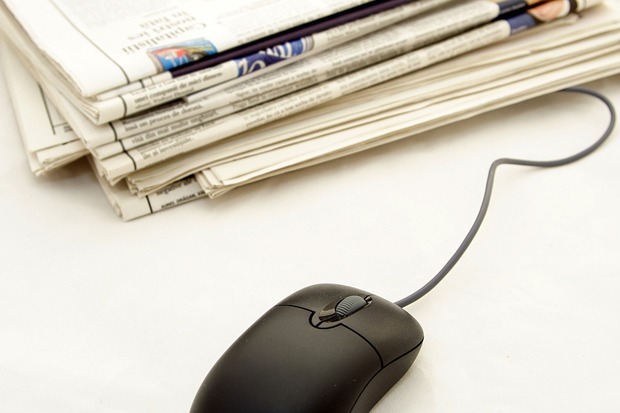
Digital Journalism: The Good, The Bad, and The Explained

trans_digital_journalism-main
Retrieved from https://multimedia.journalism.berkeley.edu/tutorials/digital-transform/

What is digital journalism? The phrase appears self-explanatory considering “digital” and “journalism” are two relatively mundane terms with fairly straightforward meanings. However, while many would believe digital journalism merely encompasses online news sources and social media sites, it actually amalgamates far more. 

Digital journalism is not just about the platform a certain type of news is on, it is also about how the news was gathered, what digital tools and technology elevate the story, and how citizens can actively engage with the media. Born from our modern world, digital journalism merges the innovation and accessibility of technology with the courageous work and voices of journalists. 

However, like all technological advances, even digital journalism has its flaws. The internet has created a space where individuals want news quickly, concisely, and usually, for free. Meaning journalists have been forced into the ethical dilemma of commodifying news to keep themselves–and their families–afloat. Not to mention, the digital platform has bred distrust between citizens and news media outlets.  

But should digital journalism itself be labeled bad–or even good? And even if it is one or the other, the fact of the matter is, digital journalism is a part of the world now–and it is not going away anytime soon. So it is worth looking at the advantages and disadvantages of this new media landscape. 

The Advantages

Accessibility. One of the greatest things born from technological advances was the sudden interest in adaptability. With ever-changing technology came new ways to tell journalistic stories, and subsequently, more opportunities to make the news accessible to people with disabilities. Nowadays, multiple major news outlets have an accessibility page that outlines how users can increase font sizes, get closed captioning on videos, and even have the text be read aloud to them. Accessibility has become a staple of the online world and digital journalism is making sure the news is accessible to all kinds of consumers by making their journalism more adaptable.  

Innovation. Hand-in-hand with these accessibility measures has been other innovations with digital journalism, including interactive news stories. From tracking the loss of animal life from the oil spill in the Gulf of Mexico to the myriad coronavirus maps outlining cases and deaths by county to The Washington Post’s award-winning timeline of the 1968 riots, digital journalism’s use of interactive storytelling has opened the world to a plethora of storytelling methods. Wheres many older news stories were focused on “what” story to tell, digital journalism has added an important question to the conversation: “how” should that story be told?

Citizen Responsibility. But it is not just journalists who benefit from the ease-of-access that digital journalism brings. Bringing journalism into the virtual space also gave regular citizens the ability to utilize it. Citizen journalism has exploded in popularity since the invention of the smartphone and the popularization of social media websites. Now, the people are holding their social structures accountable (a job usually reserved for journalists) and delivering their own news through posts, blogs, pictures, and videos. And while some may be concerned with the prospect of citizens, who do not share the same education or bias training as professional journalists, using digital journalism, it is actually necessary for a healthy democracy. Bill Kovach and Tom Rosenstiel explain in their book The Elements of Journalism, citizens have rights and responsibilities when it comes to news. Their input on the news, even when flawed, keeps the industry accountable and more in tune with the needs of the general public. 

The Disadvantages

Commodification. Although digital journalism has increased the scope of how to get ahold of the news, the idea of a “free” internet means the public is much less willing to pay for it. Paying for the news used to be an expected and universally understood phenomenon with physical newspapers, but when it digitized, consumers became reluctant to pay. And while journalism is a public service in the sense it literally serves the public, revenue is still necessary to keep journalism running. And digital journalism has had to find revenue sources by commodifying the news. The introduction of paywalls, the use of native advertising, and digital ad campaigns have made the news a more profitable practice–for better or for worse.

Accessibility (cont.). Unsurprisingly, the commodification of the news has lead to limited accessibility. And while, as previously stated, accessibility on the front of disability rights has been improved via digital journalism, accessibility when it comes to wealth distribution has become much worse. Along with the necessity of owning a computer and having access to the internet, digital journalism requires a level of “non-essential funds” not all people are privy to. With the introduction of paywalls comes the understanding not everyone will have access to the same quality of news. And while many news sources believe in keeping their coverage free, like The Guardian, the best innovations and ability to give the best coverage come from the news sources with the most resources. 

Faith in the Media. And maybe this has been one of the many reasons people have started grappling towards Facebook and other social media websites for their news–not because people necessarily prefer it, but because it is free. But this insurgence of news gathering from social media has bred distrust between the public and news media organizations. Even before the misinformation wave during the 2016 election, the internet was a place where trustworthy information was often hard to properly verify. Which has led many political voices from all sides of the spectrum to attack the media, generalizing practices and using the very tools which defined digital technology against journalists. Whereas physical newspapers were often heralded as beacons of truth, digital journalism has to defend its credibility against every other questionable website and pop-up ad haven that exists. 

So the question remains–is digital journalism a bad thing? Is it a good thing? Or is it just another side effect of progress that we are now faced with and had better start getting used to?

The answer, though complicated, does not matter as much as how citizens decide to utilize and respect digital journalism. One thing that has spurned from the digital age is the public’s access to resources to keep authority accountable–including journalists and news media outlets. Activists were outraged when the Washington Post refused to report on Jeff Bezos’s wealth and when Bloomberg failed to cover Michael Bloomberg’s stop-and-frisk statistics. With digital journalism, people are paying attention. So whatever the future holds for the digital journalism landscape, the citizens will be the ones to make sure it is for the better.

Thinking Positively

Even before the horrifying coronavirus outbreak filled major media outlets with daily death tolls and depressing pandemic updates, being constantly up to date on the news was a stressful job. 

From public shootings in the United States to the rise of authoritarian leaders in Brazil, Russia, Turkey, and across the globe to the myriad refugee crises to the genocide in Myanmar–the news cycle is not always forgiving and exposes the public to some of the most horrific human atrocities known to the world. Of course, it isn’t the fault of the media or journalists our news happens to be filled with tragedy. And after all, reporting on such vital events in human history is the job of the news media. 

But that doesn’t always make it easier. The American Psychological Association found that, for many Americans, news consumption can lead to bouts of anxiety, stress, and or loss of sleep. It’s unsurprising considering the current world we live in, but still raises concerns over the ethics of how to balance informing the public and respecting their mental health.

One solution has been an increase in popularity for positive news stories, with news media outlets focusing on “feel-good” stories to keep the audience from a constant feeling of misery. But others worry this desensitizes the world from harsher news stories which should be taken seriously, like the COVID-19 outbreak. After all, if time is spent discussing how penguins in a Chicago zoo were released to meet the other animals–just what kind of story was replaced?

I understand the need for the media to draw towards more uplifting news stories in these sorrowful times–I don’t even think it’s necessarily a bad thing. However, I believe stories that do not have the same dire impacts and are more “puff” pieces should be denoted as such. Whether that means a specific tag on the outlet’s homepage or a clear label in the story’s headline, simply fun and uplifting pieces should not be included in the same space as hard-hitting news, less the important facts be taken for granted by the public.

Out of State, Out of Luck

808 N Cooper St, Peoria, IL 61606

Video Segment: https://youtu.be/JwGWjRVMMqg

Just two blocks behind the Markin Center on the edge of Bradley University’s campus, the house at 808 N Cooper St. sits partially concealed behind a towering oak tree. The front porch is screened off, but hosts a small glass table and six mismatched chairs from different table sets. Sophomore Max Talsania leans his chair against the side of the house and types away at his computer, ignoring the Peoria rain that has begun to trickle down.

“There’s always someone on the porch,” Talsania notes. “Though I’m usually the only one when it rains.”

808 N Cooper has become a safe haven for Talsania since the coronavirus outbreak rocked the United States. He had planned to go back to his home in New York for spring break–even bought plane tickets for March 16th–but on March 13th Bradley announced an extended spring break. Hours later, classes were moved online for the remainder of the semester. And the day before Talsania was scheduled to leave, his flight was canceled along with several hundred other flights into the state.

Displaced and confused, Talsania stayed in his dorm for the first few days after the announcement. But eventually, the lack of food sources on campus drove him out–and into the spare room at 808 N Cooper with a group of his friends. The house’s lease was extended into June and Talsania jumped at the opportunity to get out of campus housing.

“At least I can work outside now,” Talsania says.

The move was supposed to be temporary, but Talsania’s attempts to return home became seemingly more impossible. Just before he purchased another ticket, Illinois extended their stay-at-home order through the month of April. And as he began making plans to return in May, his mother informed him her boss had contracted COVID-19 and his whole family was under quarantine for the next few weeks.

Now, he has no idea when he is supposed to go home.

“I can’t really imagine staying through June,” Talsania explains. “But I have no idea what is going to happen.”

And Talsania isn’t the only one. In fact, all five of his housemates are out-of-state students spread across cities in New York and Minnesota. Many of them have decided to remain in Peoria through the Fall 2020 semester rather than risk their health by traveling.

Sophomore and housemate to Talsania, Lily Pieper, went home for spring break in MN but returned to Peoria mid-March to keep her grandparents, whom she lived with in MN, safe.

“I know I will have to leave the house more than them,” Pieper explains. “So I’d rather stay in Peoria and not expose them.”

Pieper hopes she will be able to return sometime before the start of the next school year, “for a weekend if nothing else.” Although she is already moved in, she wants to take a break from campus before having to start school back up again for her junior year.

But while Pieper has the option of driving home relatively easily, Talsania is still hoping to take a plane and avoid the 14-hour drive back to NY.

“I’m waiting it out right now, but it’s definitely rough,” Talsania confesses. “Things are so up in the air right now.”

When asked if he thought he would be coming back in the fall in light of the chaos, Talsania laughed. “We’ll see,” he replied.

It’s a Business

In a capitalist society, almost everything is supposed to “run like a business.”

From a purely ideological standpoint, it makes sense. Businesses make things efficient, they reward innovation, and they prevent complacency in most cases. Running things like a business means there is a financial goal to be met and every part of that organization is working together towards that goal. It is not a bad premise–especially considering the alternatives can mean fascist and communist structures which hurt civilians.

But adding financial incentives don’t always make sense. Education’s sole purpose is to benefit the health and intellect of children, not cut costs. The government is meant to keep an organized society for the welfare of its citizens, not to work on as little a budget as possible. And journalism is one of our societal pillars meant to inform citizens to keep a healthy democracy–not to make money.

Unfortunately, many news organizations have had to sacrifice their loyalty to citizens in order to stay afloat. It isn’t their fault–it’s just how things are in the United States. But when the idea of “running like a business” interferes with your intended purpose, hasn’t a line been crossed?

Think of Native Advertising. There is no journalistic purpose for it. While it may use journalistic tools to engage an audience, it was not designed to inform the general public. It was designed to sell something. But its prevalence in our current society builds distrust between the consumer and the journalist or organization behind the work.

Ideally, journalism could be funded by the government. And while this seems like the first step into a dystopian nightmare, it could be done without conflicting interests. It is similar to the HBO model–many shows HBO financially sponsors don’t align with its company interests (or the interests of its parent company AT&T). There is a separation between the finances and the content that prevents silencing of opinions. 

It would be difficult and highly unpopular, but it is one of many options to start pulling journalism away from the claws of capitalism. Because the more journalism is run like a business, the less it is run for the benefit of the people.

Twitter University: The Ethics of Using Twitter in Education

Content Warning: Sexual Harassment

During my time as an undergraduate Journalism major, I have had to make three public Twitter accounts for my degree.

It always seems like a harmless request–so much so that multiple majors have started employing it. Public Relations, Advertising, Marketing, and several other majors are trying to expose students to their career fields by engaging them in social media while they are still students. And there’s no question social media skills are necessary to work in our modern era, so the idea of introducing students to these platforms while they are still in school makes sense. It even seems advantageous. 

I thought so too, until the first message came. 

I remember reading the username, Jerry with a series of random numbers tacked onto the end, and mentally skimming through the individuals I knew to see if I could identify the person. No one came to mind. It also seemed odd to have a reply from an anonymous egg account on a tweet for a class that was simply “Check out BU Late Night” with a series of hashtags relevant to the organization I was working with.

So I opened the tweet. “i wouldn’t mind seeing u later tonight” followed by a blue heart and winking emoji. 

In the realm of women’s harassment–and my own experience with men online–the response wasn’t enough to shake me. I ignored it. And the next one asking me where “a hottie like me studies.” And the next one commenting on a photo of myself at a school banquet with “damn u have to be a D right?”

When “Jerry” finally commented on a tweet I made about a class assignment with “smart and sexy, i bet u like anal” I blocked him and informed my teacher. My account became private after the incident and I deleted it after finishing the class.

The harassment ended, but I couldn’t shake the ridiculousness of it: why would someone be commenting on a school affiliated Twitter account? My posts were solely relevant to other students, my activity was minimal, and the pictures I used for my profile were professional albeit generic. Yes, trolls are an unfortunate side effect of being a woman and having an opinion–but a college student’s class account? Why?

Naturally, these thoughts carried over when I took another class that requested I make a public Twitter account. I was hesitant, but I assumed the previous incident was a one-off. This account required far less maintenance and only asked for me to interact with other Twitter accounts, usually verified ones.

The week after midterms, I received a direct message–well, there wasn’t really a message. Just a picture of some stranger’s genitals. 

Again, my immediate reaction was simple: Why?

Both of my accounts (and the current one I maintain for class) explicitly state I am a student, the account is specifically for class purposes, and I’ve never maintained more than about 11 followers. Why? Why? Why?

There is a level of expectation for this behavior, though even that notion highlights a seriously embedded social injustice. I also am well aware that this is a reality for women in my career field across the world, especially to journalists of color and queer women on Twitter. But it still baffles me that harassers would target accounts with so little of a social footprint (though I believe the harassers likely knew me outside of Twitter and just chose my school account to get my attention). 

And it also presents a frustrating reality when so many classes force students to create public Twitter accounts for a grade. As educational institutions continue using social media as an educational tool–and rightfully so–students, particularly marginalized students, are forced to face the grim realities of the world.

Is there a solution? Not one that fixes everything, I’m afraid. There is a need to use social media websites, like Twitter, in the classroom. But it is naive to think students won’t be targets of harassment simply because they are students. 

Hopefully, some professors may actually see these incidents as a chance to bring discussions of online harassment targeting certain groups into their curriculum. Others may choose to monitor things on a case by case basis. There is no right answer.

The only wrong answer is ignoring the reality that Twitter is not an even playing field for all people–and forgetting that students are not exempt from that reality.

People worry shelter-in-place orders are an overreaction. Immunocompromised individuals disagree.

Michael Pavone (Left) with teammate Daniel Zawadzki pictured at a speech tournament in Eau Claire, Wisconsin just a few weeks before Illinois’ shelter in place order. Courtesy of the UWEC Forensics Facebook page.

The most recent development in the COVID-19 crisis sweeping the United States is horrifying, yet so quintessentially “American” the phenomenon has almost become humorous: protesting against health and safety measures.

After Democratic Gov. Gretchen Whitmer extended Michigan’s shelter-in-place order through the end of April, she was met with a slew of protestors outside the state’s capital. The protests seemed to have been fueled by recent comments from President Trump urging the nation to “open up” by May 1st, against the advice health care professionals who warn removing precautionary measures–like shelter-in-place orders–would lead to countless more deaths.

While it is easy to think, as many of the protestors do, that local governments are simply overreacting to the COVID-19 crisis, for many individuals highly susceptible to the virus these precautions are the only things keeping them alive. And that isn’t hyperbole. Even younger immunocompromised individuals see shelter-in-place orders as a necessary inconvenience, especially when the alternative is contracting the virus because of someone else’s lapse in precaution. 

I caught up with Michael Pavone, a fellow student at Bradley University whose diabetes places him in the high-risk bracket for contracting COVID-19. He talked about the struggles he faces being immunocompromised, living away from his home in New York, and his views on sheltering-in-place.

Where are you sheltering-in-place right now?

So, Bradley kicked me out of the dorms a few weeks ago a little after spring break. I was actually planning on going home before things got really bad, but then New York kinda blew up [in terms of cases]. So now I’m staying with a bunch of friends who live, like, a block away from campus. 

Are there a lot of people staying with you?

I mean, there’s five of us. But most of us have been staying in the house since before spring break so we’re pretty safe.

And you’re the only high-risk person among you?

Yeah, but the others have actually been really great about protecting me. They’ll wash their hands a bunch, they don’t invite people over, and they usually grocery shop for me so I don’t have to leave.

Do you still go out, for essential items and other things?

I try not to. Food is the hardest part, to be honest, cause sometimes I just don’t want to cook. So I’ll go to drive-throughs or carry-out, but I try to avoid stores and other stuff. 

What precautions do you take when you go out?

I wear a mask and gloves everywhere. My mom sent me a box of black latex gloves and I’ve worn them every time I leave the house. I just have to, you know?

I think we talk about being immunocompromised in strictly medical terms, but what does it mean for you?

I don’t think people realize how common it is to have an immune disorder–like diabetes. People in my life knew I had diabetes, but didn’t know that made me immunocompromised. So when all the coronavirus stuff happened they didn’t get that I’m one of the people who needs to watch out. Basically it means that my immune system is so weak I am more likely to get the virus if I come into contact with it–it also means I’ll probably die if I get it.

Wow, you sound fairly certain. 

I mean, I’m pretty sure I’ll die if I get it. I know that’s kinda f**ed up to say, but it’s true. I know my body and I know what happens when I get sick so . . . I’ve just accepted that fact.

A lot of people are complaining about sheltering in place right now–

Yeah, that pisses me off.

Really?

Yeah, it’s just so frustrating hearing about, like, people upset because they can’t go out to eat or they miss going to classes. Cause like . . . I’m over here, like, needing groceries and shit but I know every time I leave the house I’m putting myself at risk. Every time I step out the door I have to ask myself, is this trip worth it? Am I willing to die for some Wendy’s? But to other people it’s just like, oh I’m so bored being home all the time.

If you had the chance, what would say to those people who think the government is overreacting?

It’s not about you, assholes.

Are you looking forward to when this is all over?

I mean, kinda. I’m definitely looking forward to getting back into a routine and, like, leaving my house. But I know I still have to be careful for awhile–probably until they have a vaccine, actually. So it’s just a lot of being cautious, which I’m not great at. On the plus side, I didn’t take great care of myself before the coronavirus. But now I’m definitely more aware of staying healthy and all that, so I guess that’s a win. 

Do you think we, as a community, are doing enough to keep people like you safe?

You know . . . I really don’t know. I think individuals are. I see people stepping up all the time, donating masks and following stay-at-home orders. But I also see people who just don’t care and I’m like–it’s not your life you’re risking. It’s mine and every other immunocompromised person’s. So if you’re one of those people who just doesn’t give a f**k, that’s fine. Whatever. But just know, you are just as much of a shitty person as the drunk driver who killed someone else because of their bad decision. Because that’s exactly what you’re doing.

Ethics and Access

Why is it always the journalists who sacrifice everything for the public good?

It is a very difficult time to be a journalist.

Aside from the obvious–the difficulties of working from home and the dangers that come with field reporting at the moment–journalists are facing the earliest effects of the looming recession. The COVID-19 crisis has shut down a series of corporations and businesses deemed non-essential in this tumultuous time. And while journalists thankfully fall under the umbrella of essential, the business providing their revenue through ad purchases are not so lucky.

And while major news organizations have seen an increase in newsletter subscriptions, that hasn’t prevented smaller news media sources from having to layoff swaths of their employees to stay afloat. At a time when the public needs journalism now more than ever. 

In fact, some news organizations recognize the public need for journalism amidst a pandemic. The New York Times, LA Times, and The Atlantic have all made their news coverage of COVID-19 free–no subscription necessary. As it should be; the education and information gap exist in large part because of wealth disparity. And while a monthly news subscription is nothing to a middle-class family wondering when they’ll be able to dine out again, it is everything to a single father living paycheck to paycheck trying to figure out if he needs to wear a mask to work in his area. Being able to pay for the news shouldn’t be the difference between staying healthy and ending up in the hospital.

But therein lies the reality–organizations like the NYT can afford to make their subscriptions free, as can many others. Smaller organizations can’t make the same sacrifices without their journalists paying the price. And while a government bailout would be ideal to protect journalists, under this administration, a reasonable solution seems unlikely. 

There is no right answer to how news organizations should move forward, but it feels like journalists will have to put the public’s needs over their own. And while it is inherently the journalist’s job to be devoted to the people, I have to wonder, why is it always the journalists who sacrifice everything for the public good?

Coverage Amidst the COVID-19 Crisis

Staying informed about the recently developed COVID-19 crisis–a crisis that has kept thousands in their homes, sent thousands to their deathbeds, and made millions terrified of the unforeseeable future–is an act of bravery. 

Not as brave as the thousands of medical workers risking their lives on the front lines of this pandemic, but many people underestimate the courage needed to keep reading the news every morning. To watch the numbers of infected cases in your area grow exponentially. To watch the death toll slowly increase with every new day. It is not an easy thing to do–especially for individuals coping with mental health conditions and disorders.

Hence why I’ve tried keeping a comfortable distance from articles about COVID-19, particularly in my area. Some days, I will skim through articles explaining the virus’s spread and the precautions still needed before the quarantine can end. Other days I will watch The New York Times’s Coronavirus map get increasingly redder (and add new features like tracking cases by district). But sometimes, the only thing I want to know is if it is still safe in my area to walk outside and then I shut out all other coverage.

Now I’m not advocating for being uninformed–that is a whole other danger that puts yourself and those around you at risk. Nor should anyone use the “coverage” on social media as a replacement for articles from real media websites (that is asking for the 2016 election misinformation catastrophe all over again). But for someone with diagnosed anxiety and health concerns that put me at a higher risk of contracting COVID-19, reading about the pandemic always comes with a risk. 

But as I’ve been slowly exposing myself to more and more coverage as the pandemic continues, I’ve noticed a stark difference in how my local news has approached the subject. Nearly every article focuses on my direct community or my state. I understand the importance of proximity with news stories, but amidst a pandemic, I assumed the rules might change a bit. 

For instance, the Peoria Journal Star ran serval articles involving COVID-19 in the past 48 hours but all of them focused on our local community. How are hospitals responding, how are grocery stores responding, how many cases have been reported–etc. The only story taking place outside the community was one involving Chicago and even it was framed on how it would impact the local community.

Is this the role of local news organizations at this time? It would make sense–hundreds are reporting on the national front, but only a select few sources are personalizing their stories to my area. This allows for a balance in coverage as if the news is functioning as a cohesive unit so none are left in the dark. 

Is it an attempt to stay non-partisan? Many aspects of the outbreak have been politicized and many media organizations are feeding into rhetoric on the borderline of a conspiracy theory. This approach allows individuals to understand the importance of maintaining social distancing without being overtly biased towards a specific political alignment.

But a part of me is still . . . disappointed? Concerned? Irrationally upset? I understand the national news media is fulfilling a role and local organizations can then tailor their reporting, but a part of it feels narcissistic. We are in the midst of a national crisis and I expected a level of community from our media to bring us national coverage and local coverage in the same subscription package. To those who don’t have access to national coverage and prefer their local media stations, what levels of the news are they missing?

Perhaps with the news media, like many other aspects of our society, I am relearning the cold hard truth: capitalism is still king.

Forensics teams mourn the loss of their nationals season

Bradley team members Joshua Beckles (Left) and Trijae (Right) pictured at the 2019 AFA National Tournament, picture curtesy of Sabrina Savoie from the University of Texas, Austin.

Bradley Speech Team members had their season abruptly ended as the American Forensics Association announced via Facebook the cancellation of their April national Speech and Debate tournament due to concerns over COVID-19.

The news was unprecedented in over forty years of competition. The tournament, one of the largest and most respected of the twelve forensics nationals, was expected to host over a hundred schools and over 5,000 students in Santa Ana, California. However, after a series of schools planning on attending the tournament implemented university-wide travel bans–including Western Kentucky University, George Mason University, and the University of Minnesota–the AFA tournament administration revealed they could no longer cover the costs to host.

In their official announcement, the AFA tournament administration also mentioned concerns over student safety and CDC recommendations if the tournament had proceeded as planned. “The decision to cancel the tournament has not been made lightly,” AFA tournament director and Director of Forensics at James Madison University Lee Mayfield explained in the announcement. “Our hearts break for the students, especially for our senior competitors.”

“I respect their decision,” Bradley’s Director of Forensics Andrew Eilola said after relaying the news to his team. “They are concerned about the safety of students, and I have to respect that. But that doesn’t make this situation any less devastating to my students.” 

Not two days later, the National Forensics Association national tournament in Whitewater, Wisconson scheduled for late April as well as the National Speech Championship in Fairfax, Virginia later this month were also canceled. Within a week, nine of the twelve national forensics tournaments across the nation were canceled due to COVID-19 responses. 

But for the seniors at Bradley University, the announcement about the AFA tournament had already signaled the end. “I knew what was coming,” senior and Vice President of Bradley’s Speech Team, Cassie Edlund, said. “When they announced it at our meeting, I just knew. I knew my season was over.”

Edlund was recruited her senior year of high school and had already made a name for herself as a finalist at the National Speech and Debate Association national tournament. After four years on Bradley’s team, Edlund was looking forward to sharing her performances and messages at her senior year nationals. 

“Being a senior is just different,” Edlund explained. “Every year, every performance, every script has been leading up to this year. It was supposed to be our moment to say goodbye to this activity and . . . we just don’t get that anymore.”

Senior team member Andrew Yohanan agreed. “It’s a little heartbreaking. This is something Bradley, well not just Bradley, has prepared for almost an entire year. The entire speech and debate community feels this loss.”

For Yohanan, the opportunity to compete at nationals isn’t just about leaving the activity but about acknowledging the friendships and bonds between the students across the nation. After seeing many of the seniors from other teams year after year at both regular-season tournaments and nationals, the whole circuit has been in what Yohanan describes as “a state of mourning.” 

“The entire country and many teams have empathy for each other, so it’s very saddening for us to go through this [together],” Yohanan said.

The Most Contagious Disease: Fear

I remember when I first heard about the coronavirus outbreak back in 2019–it was from a New York Times article in the World News section with only a thousand or so views. It was framed as a “Chinese issue” with no indication of the paranoia-inducing frenzy that was to come only months later.

Now, The New York Times has a whole page dedicated to the virus with news articles updated every several hours. They even have their own newsletter, titled Coronavirus Briefing. In fact, the only thing that seems to be spreading faster than the fear of the virus is news media’s capitalization of it.

The New York Times isn’t the only perpetrator by a long shot, but it’s starting to feel like most of the impulsive, paranoid actions of individuals–like massive shortages of hand sanitizer and face masks–is partially due to the media. 

No, not in the liberal-brainwashing media sense or even in the fake-news conspiracy theorist sense. But I often think back to the Ebola virus, when Americans started limiting their travel and planning increased doctors’ visits before a case had even been reported in the United States. It’s true Ebola was a threat to many communities and should have been reported on with the same importance as American issues, but a serious amount of the coverage centered on “what to do if you find out you have Ebola” or “10 ways to prevent Ebola.” 

The media bred that chaos, perhaps even unintentionally. I even understand the necessity of it considering the underfunding of journalism in this age. But profiting off a person’s fear, even if your product helps them, is still morally wrong. And the more the news media publicize anything and everything involving the coronavirus, the more people are going to react as if it is already a pandemic.

Create your own website, free on WordPress.com.Create your own website.
Start free